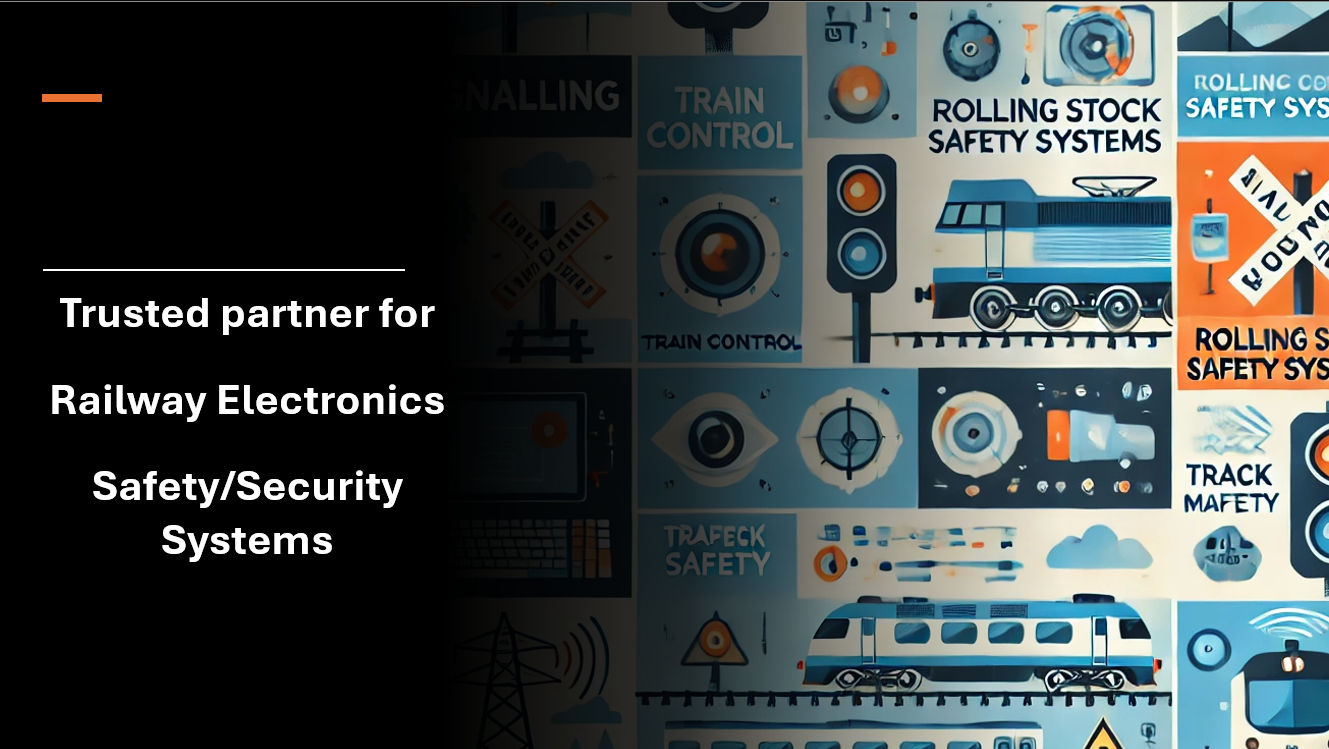
However, with increased complexity and role of railway electronics safety and security is paramount. It is essential to design systems with established functional safety standards to protect workers and minimize the risks of costly regulatory penalties, downtime, and legal liabilities.
VerveTronics is trusted partner to bridge that gap by offering advanced railway electronics systems. Our deep expertise spans the design and implementation of EN 5012X compliant Functional Safety (FuSa) and Device Security systems, ensuring safer / secure, more efficient, and compliant industrial systems.
Domain Expertise in Railways Electronics
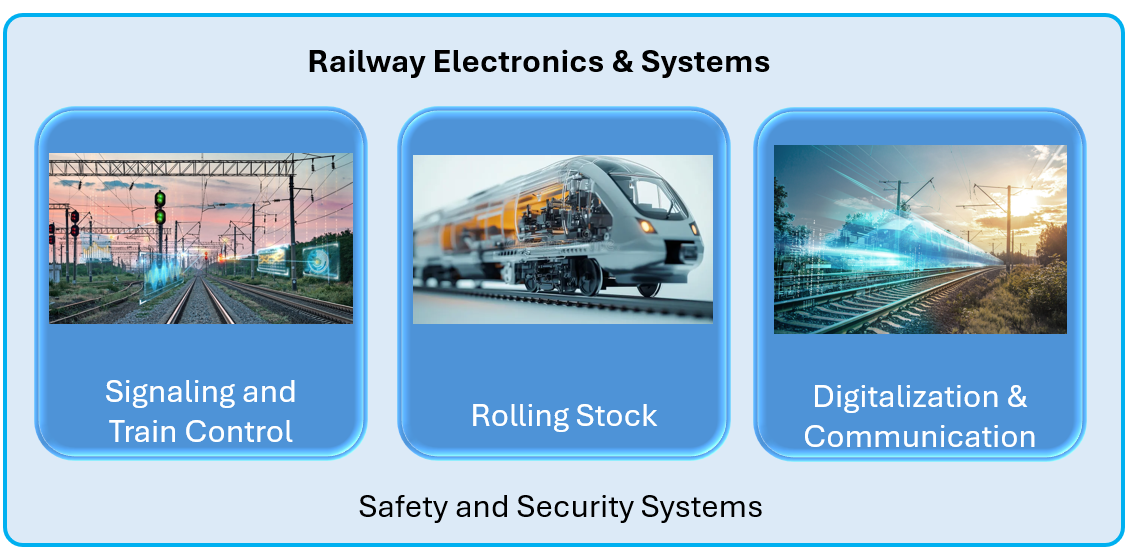
- Automatic Train Protection (ATP) – Prevents unsafe train movements by enforcing speed limits and signal compliance.
- Automatic Train Operation (ATO) – Supports automation of train acceleration, braking, and station stopping with safety redundancies.
- European Train Control System (ETCS) – A standardized safety system used in European rail networks for train signaling and control.
- Positive Train Control (PTC) – Used in North America to prevent train collisions, overspeeding, and track switch errors.
- Communication-Based Train Control (CBTC) – Real-time train monitoring for metro and light rail systems, ensuring optimal separation and preventing crashes.
- Brake Control Systems – Electronic brake control (EBC) and emergency braking systems to ensure train stops safely.
- Traction Control and Power Management – Regulates power delivery to prevent overheating or traction failures.
- Door Control & Interlock Systems – Ensures doors open/close only when safe (e.g., train is at a station and stopped).
- Fire and Smoke Detection Systems – Detects hazards and triggers alarms for safe evacuation.
- Passenger Emergency Alert Systems – Emergency brakes, alarms, and intercoms for passenger safety
- Level Crossing Protection Systems – Automatic barriers, alarms, and signaling to prevent accidents at crossings.
- Track Circuit Monitoring & Fault Detection – Ensures track integrity and prevents derailments due to broken rails or misaligned switches.
- Tunnel Safety Systems – Ventilation, lighting, and fire suppression for safe operation in tunnels.
- Platform Screen Doors – Prevents passengers from falling onto tracks.
- Secure Train-to-Ground Communication – GSM-R, LTE-R, or 5G-based communication networks for train control and safety alerts.
- Railway Operational Technology (OT) Security – Protection of signaling and control networks from hacking or failures.
- Fail-Safe Data Transmission & Encryption – Ensuring reliable communication between train control centers and onboard systems.
Functional Safety & Security challenges in Railway Electronics
- Complex Integrated Systems: Railway systems are highly integrated, with control, signaling, and communication systems working in unison. Ensuring functional safety across these systems is a complex task, especially when dealing with legacy systems or integrating new technologies like autonomous trains or advanced signaling systems.
- Strict Regulatory Requirements: Compliance with standards like EN 5012X requires a systematic approach to safety, including rigorous testing and validation processes. Railway companies often face challenges in implementing these standards consistently, which can lead to safety gaps or certification delays.
- Growing Automation & Autonomous systems: With the rise of autonomous and semi-autonomous trains, functional safety has become even more critical. Ensuring the safety of these automated systems—especially in scenarios where human operators are not present to intervene—is a significant challenge.
- Human Errors and Operational Failures : Incorrect system configurations, misinterpreted safety alerts, or errors in control center operations can compromise railway safety. Training personnel for safety-critical electronics operation is difficult, especially with rapid technological advancements.
- Secure Communication Challenges: Railways rely on wireless communication networks (GSM-R, LTE-R, 5G) for train control and signaling. Risks include signal jamming, spoofing, or man-in-the-middle attacks, which can alter train movement commands or disrupt control center communications.
Why VerveTronics?
VerveTronics specializes in helping railway operators and manufacturers navigate the complex world of functional safety. Our core strengths include:
-
- Expertise in EN 5012X Compliance: We have extensive experience working with the EN 50126, EN 50128, and EN 50129 standards. Our team understands the specific safety requirements of each standard, ensuring that railway systems meet their safety objectives from initial design through to operation.
- Comprehensive Functional Safety Support: From system design and risk assessments to validation and certification, VerveTronics provides end-to-end functional safety services. We work closely with your team to identify potential risks, mitigate them, and ensure compliance with relevant standards.
- Deep Industry Experience: We have a proven track record of working with leading railway companies to implement safety systems that reduce risks, enhance operational efficiency, and ensure compliance with global safety regulations.
-
- Holistic Approach to Safety and Security: We provide comprehensive functional safety services, from early-stage risk assessments to full-scale system validation, covering both hardware and software safety aspects.
- Innovative Solutions for Emerging Technologies: VerveTronics has a proven track record in addressing the unique safety challenges posed by railways signalling, Controls and power systems, ensuring compliance while enabling technological innovation.
- Safety Analysis and Risk Mitigation: We conduct in-depth safety analyses, including Failure Modes and Effects Analysis (FMEA) and Fault Tree Analysis (FTA), to identify and mitigate potential hazards.
- Training and Consulting: VerveTronics offers training and consulting sessions to enhance your team’s knowledge of functional safety and cyber security standards and methodologies, enabling them to manage safety-critical systems more effectively.
Our Approach
VerveTronics offers a wide range of functional safety solutions tailored to the specific needs of the railway industry:
-
- Functional Safety Lifecycle Management: We assist railway operators and manufacturers in managing the entire functional safety lifecycle as defined in EN 50126. This includes defining safety objectives, conducting hazard analysis, and ensuring that safety is embedded throughout the system’s lifecycle, from concept to decommissioning.
-
- Software Safety Compliance (EN 50128): We specialize in ensuring that railway software systems meet the safety standards set out in EN 50128. This includes developing safety-compliant software, validating the system’s safety functions, and conducting thorough testing to ensure that software failures do not compromise the safety of the railway operations.
-
- Hardware Safety Compliance (EN 50129): VerveTronics ensures that railway control systems and equipment are compliant with EN 50129, focusing on hardware integrity, fail-safe mechanisms, and redundancy. Our hardware safety solutions reduce the risk of critical failures, ensuring reliable operation under all conditions.
-
- Safety Risk Assessments: We perform comprehensive risk assessments for railway systems, identifying potential hazards and developing mitigation strategies. These assessments are conducted in line with EN 50126, ensuring that all safety risks are thoroughly evaluated and managed.
-
- System Validation and Certification Support: VerveTronics helps railway companies navigate the certification process, providing the necessary documentation, testing, and validation to meet regulatory requirements. Our team ensures that your systems are ready for audits and certifications, helping you avoid costly delays.
-
- Support for Autonomous Train Systems: As the railway industry moves towards automation, we provide specialized safety solutions for autonomous train systems, ensuring that these systems operate safely and reliably in all environments. Our solutions include safety validation for real-time decision-making systems, human-machine interaction, and fail-safe operations.
VerveTronics Case Studies / Solutions
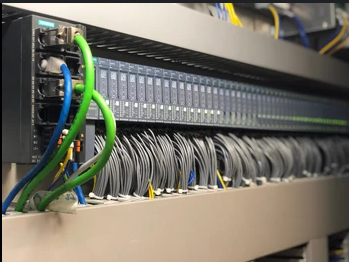
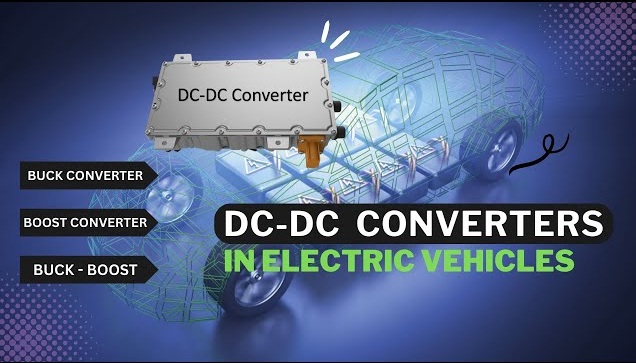
VerveTronics Role:
- Support for end to end En 5012X | IEC 61508 SIL3 compliance and certification
- Safety/Technical Concept and specifications ,
- Safety Analysis for System (HARA), Hardware(FMEDA), Software(FMEA) and Mechanical (FMEA)
- Safety Compliant Hardware Specifications and Assessment
- Hardware Design and development
- Safety Compliant Software Specifications, Validation and Assessment
- SIL3 Process Development and Improvements
- Safety Assessment and Certifications
VerveTronics Role:
- Support for end to end EN5012x/IEC 61508 SIL3 compliance
- Safety/Technical Concept and specifications ,
- Safety Analysis for Hardware(FMEDA), Software (FMEA) and Mechanical (FMEA)
- Safety Compliant Hardware Specifications and Assessment
- Safety Compliant Software Specifications and Assessment
- SIL3 Process Development and Improvements
- Safety Assessment
VerveTronics Role:
- Safety/Technical Concept and specifications ,
- Safety Analysis for Hardware(FMEDA), Software (FMEA) and Mechanical (FMEA)
- Safety Compliant Hardware Specifications and Assessment
- Safety Compliant Software Specifications and Assessment
- Safety Assessment.
Knowledge Center
 Railway Functional Safety & EN 5012x Expertise
VerveTronics provides railway functional safety engineering and consulting for safety-critical electronic, electrical, software and control systems across rolling stock, signalling, train control, power, sensors and connected railway systems.
Our railway safety expertise is aligned with the EN 5012x family—EN 50126 for RAMS and lifecycle management, EN 50128 for safety-related railway software, and EN 50129 for safety-related electronic systems, particularly signalling and control. We support organizations from safety planning and hazard analysis through safety requirements, architecture, hardware/software safety engineering, verification, validation, safety case development and assessment/certification support.
The page should clearly target both railway OEM/Tier-1 engineering searches and project-specific searches such as railway signalling safety, ATP safety, EN 50128 software compliance, EN 50129 assessment, railway power electronics safety and train communication security.
- Safety-critical integrated systems: Signalling, train control, rolling stock, communication and control systems interact across system boundaries and interfaces.
- RAMS and lifecycle complexity: Railway projects must manage reliability, availability, maintainability and safety throughout the lifecycle, not only during product development.
- High-integrity signalling and ATP: Train protection and signalling functions require disciplined hazard management, safety requirements, fail-safe architectures and rigorous verification/validation.
- Software-intensive systems: Modern ATP, ATO, ETCS, CBTC and control platforms increase dependence on safety-related software and development processes.
- Power and energy safety: Converters, traction-related electronics, auxiliary power and onboard energy systems can introduce electrical, thermal, control and failure-management hazards.
- Sensor and actuator dependence: Speed, position, pressure, temperature, door, brake and track-related sensing must support safe decisions under faults and degraded conditions.
- Connectivity and cyber risk: GSM-R, LTE-R, 5G, Ethernet and other connected interfaces introduce availability, integrity and security considerations for railway OT.
- Legacy and modernization: New digital systems often need to coexist with legacy signalling, controls and communication infrastructure.
- Assessment and certification readiness: Safety evidence, traceability, independence, verification records and safety cases must be organized early to avoid late project gaps.
Railway Signalling & Train Control
- Interlocking and signalling systems
- Fixed-block and moving-block concepts
- Train control centres
- Vital control electronics
- Signal interfaces and trackside equipment
Automatic Train Protection & Automation
- ATP safety functions
- ATO and automated train operations
- ETCS-related safety systems
- CBTC-related safety functions
- Speed supervision, braking intervention and safe movement authority
Rolling Stock & Onboard Electronics
- Onboard control systems
- Brake and door-related safety functions
- Vehicle control electronics
- Passenger and platform interface systems
- Diagnostic and monitoring electronics
Power & Energy Systems
- DC power converters
- Auxiliary power electronics
- Power distribution and protection
- Energy storage/BMS interfaces
- Overcurrent, overvoltage, thermal and shutdown protection
Controls, Sensors & Actuators
- Safety-related controllers
- Encoders and speed sensors
- Pressure/temperature sensors
- Brake and actuator interfaces
- Safety I/O, watchdogs, diagnostics and fault reaction
Railway Connectivity & Digitalisation
- Train-to-ground communication
- GSM-R, LTE-R and 5G interfaces
- Ethernet and IP-based railway networks
- Remote diagnostics and predictive maintenance
- Secure communication and data integrity
Metro, Urban Rail & Autonomous Operations
- Metro and light-rail systems
- CBTC environments
- Automated and unattended train operation
- Platform screen door interfaces
- Safety validation of automated decision/control functions
| Standard / Framework | Primary focus | Typical application |
| EN 50126 | RAMS and railway lifecycle | System lifecycle, hazard management, RAMS and safety planning |
| EN 50128 | Railway safety-related software | Software lifecycle, development, verification, validation and testing |
| EN 50129 | Safety-related electronic systems | Signalling/control electronics, safety case and evidence |
| EN 50121 series | Railway EMC | Electromagnetic compatibility for railway applications |
| IEC 61508 | Functional safety foundation | Reference where applicable to product/system development or derived safety practices |
| IEC 62443 | Industrial/OT cybersecurity | Security engineering for connected control environments where applicable |
| EN 50159 | Safety-related communication | Communication safety and transmission of safety-related information |
Note: The exact standards set and applicable edition should be confirmed against the project scope, railway application, geography, contractual requirements and assessment/certification basis.
- Railway-focused safety engineering: Current VerveTronics railway material explicitly covers EN 50126, EN 50128 and EN 50129 and positions the company around railway electronics functional safety and security.
- End-to-end lifecycle support: Support can span safety planning, hazard analysis, requirements, architecture, hardware/software safety engineering, V&V, safety case and assessment/certification support.
- Cross-domain engineering: Railway expertise can connect system safety with electronics, embedded software, power conversion, controls, sensors and communications.
- Practical safety analysis: FMEA/FMECA, FMEDA and FTA are part of the existing railway capability positioning.
- Safety + security: Railway systems increasingly depend on connected train-control and operational technology; safety and security interfaces should be addressed together without conflating their objectives.
- Growing Automation & Autonomous systems: With the rise of autonomous and semi-autonomous trains, functional safety has become even more critical. Ensuring the safety of these automated systems—especially in scenarios where human operators are not present to intervene—is a significant challenge.
- Human Errors and Operational Failures : Incorrect system configurations, misinterpreted safety alerts, or errors in control center operations can compromise railway safety. Training personnel for safety-critical electronics operation is difficult, especially with rapid technological advancements.
- Secure Communication Challenges: Railways rely on wireless communication networks (GSM-R, LTE-R, 5G) for train control and signaling. Risks include signal jamming, spoofing, or man-in-the-middle attacks, which can alter train movement commands or disrupt control center communications.
- Complex Integrated Systems: Railway systems are highly integrated, with control, signaling, and communication systems working in unison. Ensuring functional safety across these systems is a complex task, especially when dealing with legacy systems or integrating new technologies like autonomous trains or advanced signaling systems.
Railway Safety Lifecycle & EN 50126
- Safety lifecycle planning and tailoring
- RAMS and safety requirements
- Hazard identification and hazard log support
- Risk assessment and safety allocation
- Safety management plans and work products
- Interface and operational hazard analysis
EN 50128 Railway Software Safety
- Software safety requirements and architecture
- Safety lifecycle/process definition
- Software verification and validation
- Static/dynamic analysis and testing strategy
- Traceability and review support
- Software safety evidence preparation
EN 50129 Safety-Related Electronic Systems
- Safety-related system architecture
- Hardware safety requirements
- Failure analysis and diagnostic strategy
- FMEDA/FMEA/FTA support
- Safety mechanisms and fault reaction
- Safety evidence and safety case support
Signalling, ATP, ATO & Train Control
- Signalling safety analysis
- ATP safety functions and interfaces
- Train control and interlocking safety
- ATO/CBTC safety considerations
- Braking and speed supervision functions
- Safe-state and degraded-mode analysis
Power, Controls & Sensors
- DC/DC and power converter safety
- Power distribution/protection analysis
- Controller and safety I/O assessment
- Sensor failure-mode analysis
- Actuator/interface safety
- Fault detection, diagnostics and safe shutdown
Verification, Validation & Assessment Support
- Safety requirements verification
- System/software/hardware V&V planning
- Fault injection and robustness testing strategy
- Safety validation evidence
- Safety case structure and review
- Independent assessment/certification readiness support
Training & Consulting
- EN 5012x awareness and project workshops
- Railway RAMS and safety lifecycle training
- Hazard analysis and safety case workshops
- Safety process gap assessments
- Project-specific consulting and mentoring
European Tier-1 – DC Power Converter System, SIL3
- Current VerveTronics railway content states that the company worked with a leading European Tier-1 supplier to develop a DC Power Converter System according to SIL3 rating. The stated role included safety/technical concept and specifications; hardware FMEDA; software and mechanical FMEA; safety-compliant hardware and software specifications/assessment; and safety assessment.
- Recommended website presentation: position this as a concise proof point for railway power-electronics safety engineering, then link to a dedicated case-study page if available.
Additional case-study formats to add when project evidence is approved
-
- Railway signalling/ATP controller – hazard analysis, safety requirements, architecture, V&V and assessment evidence.
- Railway sensor/controller – sensor diagnostics, fault detection, safe-state behavior and safety validation.
- Train communication gateway – safety-related communication, interface integrity and security considerations.
- Rolling-stock power electronics – converter protection, fault handling, diagnostics and safety assessment.
Only publish customer names, exact SIL targets, product details, certification status or measurable outcomes where they are approved and documented.
- Identify safety-security interfaces during system architecture and hazard/threat analysis.
- Protect safety-related communication paths against integrity and availability threats.
- Define safe behavior for communication loss, corrupted data, delayed messages and degraded connectivity.
- Coordinate cybersecurity requirements with safety requirements without treating security controls as substitutes for functional safety mechanisms.
- Consider secure update, diagnostics, access control and network segmentation for connected railway electronics where applicable.
Security claims should be scoped to the applicable railway cybersecurity requirements and project architecture; avoid claiming that EN 5012x alone provides cybersecurity compliance.
Engagement Models
- Project-based safety engineering – defined work package such as hazard analysis, FMEA/FMEDA/FTA, safety requirements or V&V.
- Lifecycle consulting – ongoing safety engineering support from concept through assessment.
- Independent technical review – review of safety plans, requirements, architecture, analyses, V&V and safety case evidence.
- Assessment readiness – gap assessment and evidence preparation before customer/independent assessment.
- Training and workshops – EN 5012x, RAMS, hazard analysis, safety case and safety lifecycle topics.
Primary CTA
Planning a railway safety or EN 5012x project? Talk to VerveTronics railway functional safety experts about your signalling, ATP, controls, power, sensors or connectivity system.
Secondary CTA
Need an EN 50126 / EN 50128 / EN 50129 gap assessment or safety engineering work package? Share your product architecture, safety target and project lifecycle for an initial discussion.
- What is EN 5012x in railway safety? – EN 5012x is commonly used as shorthand for the railway safety standards EN 50126, EN 50128 and EN 50129, covering RAMS/lifecycle, safety-related software and safety-related electronic systems respectively.
- What does EN 50126 cover? – EN 50126 provides a railway RAMS and lifecycle framework covering reliability, availability, maintainability and safety, including lifecycle and risk-management activities.
- What is the difference between EN 50128 and EN 50129? – EN 50128 focuses on safety-related railway software, while EN 50129 focuses on safety-related electronic systems, particularly in signalling and control applications.
- What SIL levels are used in railway safety? – Railway standards use Safety Integrity Levels (SIL), commonly SIL1 through SIL4. The required level is determined by the applicable safety analysis, risk acceptance and system safety requirements.
- Does railway safety apply only to signalling? – No. Railway safety engineering can apply to rolling stock, train control, braking, power electronics, sensors, communication interfaces, automation and other safety-related systems depending on the application.
- Can VerveTronics support ATP safety projects? – Yes. The railway offering can support safety engineering for ATP and related train-control functions, including hazard analysis, safety requirements, architecture, V&V and assessment readiness.
- Can VerveTronics support railway power electronics safety? – Yes. Existing railway material includes a European Tier-1 DC power converter SIL3 project and describes safety/technical concepts, FMEDA/FMEA, safety specifications and safety assessment activities.
- Can VerveTronics support EN 50128 software compliance? – Yes. Services can include software safety lifecycle support, safety requirements, architecture, verification, validation, testing strategy and evidence preparation.
- Can VerveTronics support EN 50129 assessment? – VerveTronics can support safety engineering, evidence preparation and assessment/certification readiness. Formal independent assessment or certification remains subject to the applicable independent assessor/certification process.
- How does EN 50126 relate to RAMS? – RAMS stands for Reliability, Availability, Maintainability and Safety. EN 50126 provides a lifecycle-oriented framework for managing these characteristics in railway systems.
- What safety analyses are used in railway projects? – Depending on scope, activities can include HAZID/HAZOP, hazard analysis, FMEA/FMECA, FTA, FMEDA, interface hazard analysis and quantitative/qualitative risk analysis.
- What railway systems can VerveTronics support? – The domain can cover signalling, train control, ATP/ATO, rolling stock electronics, power and energy systems, controllers, sensors, communication and digitalisation systems.
- Can railway safety and cybersecurity be addressed together? – They can be coordinated at architecture and lifecycle level. Safety addresses unacceptable risk from hazardous system behavior, while cybersecurity addresses malicious or unauthorized actions and their consequences.
- Does VerveTronics provide railway certification? – VerveTronics can provide engineering, consulting, evidence preparation and assessment/certification support. The formal certification/independent assessment authority depends on the applicable project and assessment scheme.
- When should EN 5012x safety activities start? – Safety activities should begin early in the lifecycle so hazards, safety requirements, architecture, verification strategy and evidence expectations influence the design rather than being addressed only at the end.