Functional Safety Analysis Services – HARA, FMEA, FMEDA, FTA & DFA
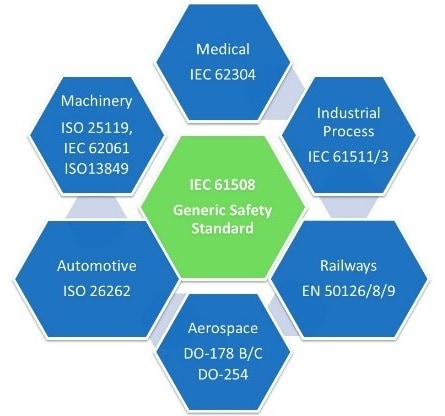
We support projects aligned with ISO 26262 for road vehicles, IEC 61508 for industrial and other safety-related systems, and ISO 13849 for safety-related parts of machinery control systems. Depending on the product and target, analysis can support ASIL-oriented, SIL-oriented or Performance Level-oriented development and assessment activities.
Whether you need a complete safety-analysis work package, an independent review of an existing analysis, or specialist support for a difficult hardware or system safety problem, VerveTronics can work with your engineering team from concept through verification and assessment preparation.
Need support with an Functional Safety project? Contact our Functional Safety experts
- Incomplete or changing item/system definition: Safety analyses become unstable when functions, interfaces, operating modes, assumptions or safe states are not clearly defined. We start by establishing the analysis boundary, assumptions, interfaces and operating context.
- Safety goals and failure modes are not traceable: HARA, FMEA, FTA, FMEDA and safety requirements should tell a consistent engineering story. We connect hazards and safety goals to safety requirements, failure modes, safety mechanisms and evidence.
- Hardware metrics do not meet the target: SPFM, LFM, PMHF, PFH, PFDavg or MTTFd results depend on failure-rate assumptions, diagnostic coverage, fault classification, architecture and mission/lifetime assumptions. We identify the contributors and engineering levers behind the result.
- Dependent and common-cause failures are overlooked: Redundancy is only useful when the redundant elements are sufficiently independent. DFA/CCF analysis examines shared resources, interfaces, power, clocks, communications, environmental influences and other dependencies.
- FMEA and FTA tell different stories: FMEA is primarily bottom-up/inductive while FTA is top-down/deductive. Differences in boundaries, failure definitions or assumptions can create apparent contradictions. We reconcile the analyses.
- Analysis is disconnected from verification: A safety mechanism or diagnostic claim needs evidence. Analysis outputs should be usable to derive fault-injection, validation and verification objectives where applicable.
Need support with an Functional Safety project? Contact our Functional Safety experts
| Analysis | Primary Purpose | Typical Inputs | Typical Outputs |
| HARA / Hazard & Risk Analysis | Identify hazardous events, assess risk and derive safety goals or safety functions as applicable. | Item definition, operating situations, malfunctions, vehicle/machine context, assumptions. | Hazardous events, risk classification, safety goals/functions, ASIL/SIL/PL-related targets as applicable. |
| FMEA / DFMEA | Identify failure modes, causes, local/end effects, detection and mitigation. | Architecture, schematics, BOM, requirements, interfaces, operating modes, component data. | Failure-mode catalogue, effects/causes, detection, controls, recommendations and traceability. |
| FMEDA | Quantify hardware failure behavior and diagnostic effectiveness against applicable safety metrics. | Architecture, component failure rates, failure distributions, diagnostics, safety mechanisms, mission/lifetime assumptions. | Failure-rate model, safe/dangerous classifications, diagnostic coverage, SPFM/LFM/PMHF or other applicable metrics. |
| FTA / Fault Tree Analysis | Trace how combinations of faults can lead to a defined top event or safety violation. | Safety goals, architecture, failure modes, interfaces, safety mechanisms. | Fault trees, minimal cut sets, qualitative/quantitative results where applicable, mitigation actions. |
| DFA / Dependent Failure Analysis | Identify dependencies that could defeat intended independence or redundancy. | Architecture, shared resources, power/clock/reset/communication paths, physical layout, safety mechanisms. | Dependency catalogue, common/dependent failure paths, independence assessment, mitigation recommendations. |
Key engineering principle: an analysis should be traceable to the product. We therefore review the analysis boundary, assumptions and interfaces before drawing conclusions from the numbers.
Need support with an Functional Safety project? Contact our Functional Safety experts
- HARA Services — Item/function review; operating situations; malfunction identification; hazardous-event analysis; risk classification; safety-goal derivation; safe-state considerations; traceability into functional safety requirements.
- FMEA / DFMEA Services — System, hardware, software and mechanical failure-mode analysis as applicable; failure causes and effects; detection and mitigation; safety-related failure classification; linkage to requirements and verification.
- FMEDA Services — Hardware failure-rate modelling; failure classification; diagnostic coverage assessment; safety-mechanism effectiveness; quantitative safety metrics such as SPFM, LFM and PMHF where applicable; sensitivity and improvement analysis.
- FTA Services — Top-event definition; fault-tree construction; AND/OR logic; propagation analysis; cut-set review; qualitative and quantitative analysis where appropriate; reconciliation with FMEA and safety requirements.
- DFA / Dependent Failure Analysis Services — Assessment of common resources, interfaces, shared power/clock/reset, communication, software/hardware dependencies, environmental influences and other mechanisms that can compromise independence.
- Safety Metrics & Architecture Review — Review of safety architecture, redundancy, diagnostics, fault reaction, FTTI-related constraints, safety mechanisms and architecture assumptions against the applicable target.
- Safety Analysis Review & Gap Assessment — Independent review of customer-created HARA/FMEA/FMEDA/FTA/DFA; identification of missing evidence, inconsistent assumptions, traceability gaps and calculation issues; prioritized remediation actions.
- Fault Injection & Validation Support — Translate safety-analysis assumptions into fault-injection and validation objectives where appropriate, including hardware/software fault injection and system-level evidence planning.
Typical Deliverables
- HARA / hazard and risk analysis workbook and rationale
- System, hardware, software and/or mechanical FMEA/DFMEA
- FMEDA model, assumptions, failure-rate inputs and safety-metric results
- Fault Tree Analysis models and top-event results
- Dependent Failure / common-cause analysis and independence assessment
- Safety analysis assumptions, exclusions and interface definitions
- Safety-mechanism and diagnostic-coverage review
- Traceability from hazards/safety goals to safety requirements and analysis evidence
- Analysis review report with findings, recommendations and closure tracking
- Inputs for safety case, verification, validation and assessment activities as applicable
Standards & Safety Targets We Work With
- ISO 26262 — automotive Functional Safety; analysis activities across the relevant concept, system, hardware, software and supporting lifecycle stages. PMFH, SPFM, LFM, DCLS/TMR, BIST coverage
- IEC 61508 — generic Functional Safety for electrical/electronic/programmable electronic safety-related systems; risk reduction and SIL-oriented analysis as applicable. Safe Failure Fraction (SFF), PFH/PFDavg, systematic capability
- ISO 13849 — safety-related parts of control systems for machinery; risk reduction and Performance Level-oriented analysis, including Category 1-4, MTTFd, DC and CCF considerations as applicable.
- DO-254— DAL A – E, Complex electronic hardware design assurance, gate-level/FPGA verification.
- EN 50129 / EN 50126 / EN 50129 : Safety case assurance, hardware fault tolerance, reliability
- IEC 62304 (Software) + ISO 14971 (Risk): Hardware-software risk integration, fault control measures, Class A – C
- Related sector/application standards can be considered where relevant, including ISO 25119 for agricultural/off-highway machinery and other product-specific safety frameworks.
Need support with an Functional Safety project? Contact our Functional Safety experts
- ASIL-D / SIL3 Electric Power Steering System
- European Tier-1 engagement for end-to-end ISO 26262 / IEC 61508 support.
- Safety/technical concept and specifications.
- System HARA, hardware FMEDA, software FMEA and mechanical FMEA.
- Safety-compliant hardware/software specifications and assessment support.
- ASIL-D / SIL3 process development, safety assessment and certification support.
ASIL-B DC Power Converter System
- European Tier-1 engagement for an ASIL-B-rated DC power converter system.
- Hardware FMEDA plus software and mechanical FMEA.
- Safety-compliant hardware and software specifications and assessment support.
ASIL-C Electronic DC Protection System
- US Tier-1 engagement for an ASIL-C electronic DC protection system.
- System safety/technical concept and specifications.
- Hardware FMEDA, software FMEA and mechanical FMEA.
- Safety-compliant specifications, assessment and process improvement support.
Need support with an Functional Safety project? Contact our Functional Safety experts
- Automotive & EV: powertrain ECUs, chassis, steering/braking, ADAS, body control, telematics, electric power electronics and DC protection systems.
- Battery & Energy Systems: battery management systems, battery packs, protection electronics, chargers, converters and power-control systems.
- Industrial & Machinery: industrial controllers, drives, power electronics, safety-related control systems and machinery safety functions.
- Off-Highway & Agricultural: tractors, mobile machinery, electrified off-highway platforms and safety-related control functions.
- Robotics & Autonomous Systems: safety-related controllers, sensing/actuation chains, protective functions and safety architectures.
- Aerospace & Defence: safety analysis support for safety-critical electronic and embedded systems, subject to the applicable program and sector standards.
- Semiconductor & Embedded Platforms: safety analysis of MCUs, SoCs, power-management and supporting components where failure data and architecture information are available.
Need support with an Functional Safety project? Contact our Functional Safety experts
- Complete Safety Analysis Work Package — We own a defined analysis scope from inputs and assumptions through analysis, review, findings and final deliverables.
- Specialist FMEDA / Quantitative Analysis — Focused support for hardware failure-rate modelling, diagnostic coverage, safety metrics and architecture improvement.
- Independent Analysis Review — Independent review of customer-created HARA, FMEA, FMEDA, FTA or DFA before a project milestone, audit or assessment.
- Embedded Safety Engineer — A VerveTronics safety engineer works with your systems, hardware, software or quality team as part of the project team.
- Assessment / Gap Closure Support — Identify gaps against the applicable safety process and engineering expectations, then support closure with practical evidence and work products.
- Training + Workshop — Targeted workshops for HARA, FMEA, FMEDA, FTA, DFA, safety metrics and analysis tool usage, tailored to the product and team maturity.
Engagements can be fixed-scope, milestone-based, time-and-materials or embedded-team support depending on project needs, information availability and required independence.
Why Work With VerveTronics?
- Cross-functional safety engineering across systems, hardware, software and mechanical domains.
- Experience supporting automotive and industrial projects up to ASIL-D / SIL3 targets, subject to project scope and applicable requirements.
- Ability to combine qualitative analysis with quantitative hardware safety analysis.
- Analysis linked to architecture, requirements, safety mechanisms and verification rather than treated as isolated documentation.
- Experience with safety-analysis tooling and engineering data where customer tool environments require it.
- Support available from a single analysis activity through broader Functional Safety consulting, process, development, verification and assessment activities.
Need support with an Functional Safety project? Contact our Functional Safety experts
- What are Functional Safety Analysis Services? – Functional Safety Analysis Services are engineering activities used to identify hazards and failure modes, understand their effects, assess risk, evaluate safety mechanisms and demonstrate that the product architecture and implementation address applicable safety objectives. Typical analyses include HARA, FMEA, FMEDA, FTA and DFA.
- What is HARA and when is it performed? – HARA stands for Hazard Analysis and Risk Assessment. In an ISO 26262 context, it is performed during the concept phase to analyze hazardous events and derive safety goals and ASIL classifications. The exact scope and method depend on the product, item definition and applicable standard.
- What is the difference between FMEA and FTA? – FMEA is primarily an inductive, bottom-up method that starts from component or function failure modes and evaluates their effects. FTA is primarily deductive, top-down analysis that starts from a defined top event and identifies combinations of faults that can contribute to it. Using both can provide complementary views of system safety.
- What is FMEDA used for? – FMEDA is used for detailed quantitative hardware safety analysis. It combines component failure-rate information, failure classifications and diagnostic coverage assumptions to evaluate applicable hardware safety metrics and identify where architecture or diagnostic improvements may be needed.
- What is DFA in Functional Safety? – In this context, DFA refers to Dependent Failure Analysis. It examines dependencies and common causes that may cause multiple elements, redundant channels or safety mechanisms to fail together or lose their intended independence.
- Can VerveTronics perform only an FMEDA or FMEA? – Yes. Safety-analysis activities can be commissioned as standalone work packages or combined into an integrated analysis. Scope can include an independent review of existing customer analyses.
- Can you support ISO 26262 ASIL-D analysis? – VerveTronics’ documented project experience includes ISO 26262 work supporting ASIL-D programs, including system HARA, hardware FMEDA, software FMEA and mechanical FMEA. The exact analysis scope depends on the product and project evidence available.
- Can you support IEC 61508 SIL3 analysis? – VerveTronics documents experience with IEC 61508 SIL3 projects and provides safety-analysis support including FMEA, FMEDA, FTA and dependent/common-cause analysis as applicable.
- Do you support ISO 13849 and Performance Level analysis? – Yes. VerveTronics provides ISO 13849 Functional Safety consulting for machinery and control systems, including safety analysis, FMEA/FTA/FMEDA-related activities and Performance Level-oriented assessment. The applicable calculations and evidence depend on the architecture and product.
- What inputs are required for a safety analysis? – Typical inputs include item/system definition, functional requirements, architecture diagrams, schematics, BOM, component data, interfaces, operating modes, safety requirements, safety mechanisms, failure-rate data and existing verification evidence. The minimum input set depends on the analysis.
- Can you review an existing customer FMEA/FMEDA/FTA? – Yes. An independent review can examine scope, assumptions, failure classification, diagnostic coverage, calculations, traceability, consistency between analyses and alignment with the applicable project safety objectives.
- Do you provide a certification? – VerveTronics provides engineering, consulting, analysis, assessment-preparation and compliance support. Formal certification or independent safety assessment, where required, is performed by the applicable accredited/authorized organization.