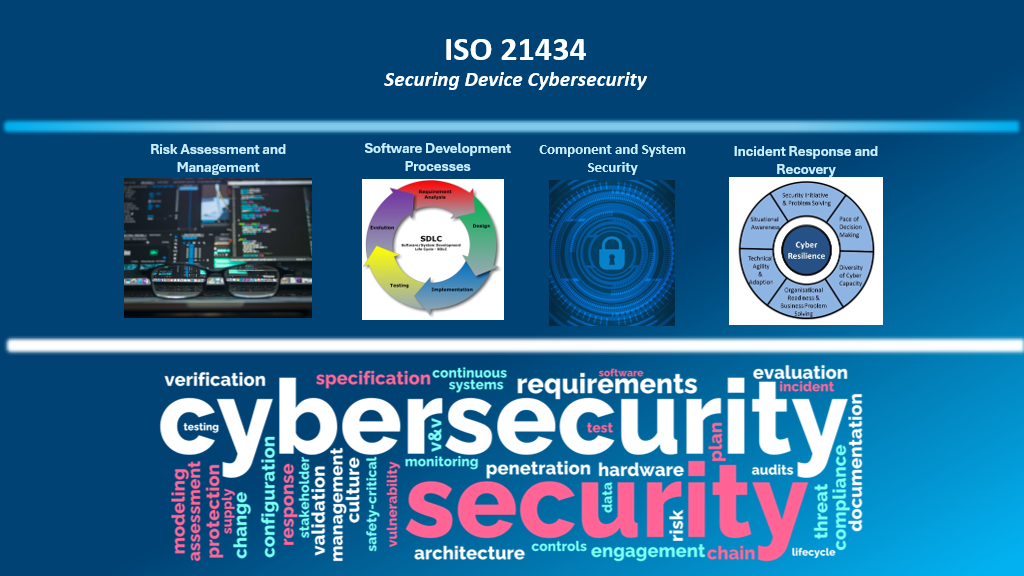
As the automotive industry advances toward increased connectivity, electrification, and automation, cybersecurity has become a fundamental concern. Modern vehicles depend heavily on complex software architectures and interconnected communication networks, significantly expanding the attack surface. If left unaddressed, cybersecurity vulnerabilities can compromise safety-critical functions, posing serious risks to drivers, passengers, pedestrians, and surrounding infrastructure.
To systematically manage these risks, the ISO/SAE 21434 standard provides a comprehensive framework for cybersecurity risk management in road vehicles. It establishes structured processes for identifying, assessing, and mitigating cyber risks throughout the entire vehicle lifecycle — from concept and development to production, operation, and decommissioning — ensuring resilience against evolving cyber threats.
At VerveTronics, we understand the urgency and complexity of automotive cybersecurity compliance. Our experienced team supports automotive manufacturers and suppliers in aligning with ISO/SAE 21434 requirements by integrating robust cybersecurity practices into product development and lifecycle management. Through tailored, risk-based solutions, we help our clients strengthen system security, reduce vulnerabilities, and build resilient automotive technologies ready for the future.
Overview of ISO/SAE 21434
ISO/SAE 21434, titled “Road Vehicles – Cybersecurity Engineering,” establishes cybersecurity engineering requirements and processes for managing cybersecurity risks in road vehicles. The standard defines a structured, risk-based approach to integrating cybersecurity throughout the entire vehicle lifecycle — from concept and development to production, operation, and decommissioning. Its objective is to systematically identify, assess, treat, and monitor cybersecurity risks affecting vehicle electrical and electronic systems.
ISO/SAE 21434 provides an organizational cybersecurity management framework that supports governance, threat analysis and risk assessment (TARA), risk treatment, validation, and continuous monitoring activities. By addressing the confidentiality, integrity, and availability of vehicle systems and related assets, the standard enables manufacturers and suppliers to strengthen the resilience of connected vehicle technologies against evolving cyber threats.
As vehicles become increasingly connected and automated, incorporating advanced electronic architectures, telematics, V2X communication, and software-driven functionality, the cybersecurity attack surface expands significantly. This evolving landscape demands a proactive and systematic cybersecurity strategy to prevent unauthorized access, system manipulation, and potential safety impacts. Failure to adequately manage these risks can compromise user safety, regulatory compliance, and brand reputation. Consequently, alignment with ISO/SAE 21434 is becoming an essential requirement for automotive manufacturers and suppliers operating in today’s connected mobility ecosystem.
Why VerveTronics?
VerveTronics stands out in the automotive cybersecurity landscape thanks to our deep expertise and extensive experience in both cybersecurity and transportation technology. Our team is well-versed in the nuances of ISO 21434 and can provide comprehensive support to ensure compliance and risk management. We understand the intricacies of the automotive environment and are equipped to develop tailored solutions that meet the specific needs of our clients. Our commitment to excellence ensures that we not only address current challenges but also anticipate future cybersecurity demands.
Our Approach
VerveTronics offers a range of services designed to help automotive manufacturers implement ISO/SAE 21434 effectively. Our approach includes:
-
- Risk Assessment: Conducting thorough threat analysis and risk assessments to identify vulnerabilities in automotive systems.
- Cybersecurity Strategy Development: Assisting clients in developing comprehensive cybersecurity strategies that align with ISO 21434 requirements.
- Training and Support: Providing training for teams on best practices in cybersecurity engineering and compliance.
- Documentation and Compliance: Helping organizations create and maintain the necessary documentation to demonstrate compliance with the standard.
- Ongoing Monitoring: Establishing processes for continuous monitoring and review of cybersecurity measures to adapt to evolving threats.
VerveTronics Case Studies/Solutions
VerveTronics has successfully worked with clients across various industries to develop and deploy safety compliant systems. Our case studies demonstrate our ability to implement cost-effective, safety-critical solutions that improve system performance while ensuring full regulatory compliance.
VerveTronics has successfully worked with clients across various industries to develop and deploy safety compliant systems. Our case studies demonstrate our ability to implement cost-effective, safety-critical solutions that improve system performance while ensuring full regulatory compliance.
VerveTronics has successfully worked with clients across various industries to develop and deploy safety compliant systems. Our case studies demonstrate our ability to implement cost-effective, safety-critical solutions that improve system performance while ensuring full regulatory compliance.
Knowledge Center
Cybersecurity Responsibilities of ISO 21434
Cyber Security ISO 21434 and Safety
IoT Device Security
 ISO/SAE 21434 Automotive Cybersecurity Consulting & Engineering
Build cybersecurity into automotive E/E systems from concept through decommissioning with ISO/SAE 21434-aligned engineering, TARA, requirements, architecture, verification and cybersecurity assurance. VerveTronics supports OEMs, Tier 1/Tier 2 suppliers and embedded engineering teams developing ECUs, gateways, domain controllers, connected devices and vehicle communication interfaces.
- Connected ECUs, vehicle Ethernet, wireless interfaces and diagnostics expand the attack surface.
- Cybersecurity work products must remain traceable from assets and threats through cybersecurity goals, requirements, design and validation.
- Organizations often need to integrate cybersecurity with functional safety, software, hardware, systems engineering and supplier processes.
- UNECE cybersecurity requirements create additional CSMS and vehicle-level expectations beyond individual ECU security.
- Legacy products may require cybersecurity gap assessment, remediation and evidence generation without restarting the complete development lifecycle.
- ISO/SAE 21434 lifecycle and work-product expertise
- TARA and attack-path analysis for item and component scope
- System, hardware and software cybersecurity requirements
- Secure architecture, HSM, secure boot, diagnostics and update security
- Cybersecurity verification, vulnerability assessment and penetration-testing coordination
- Traceability, cybersecurity case and supplier evidence support
- ISO/SAE 21434 gap assessment and implementation roadmap
- TARA: assets, damage scenarios, threat scenarios, attack paths and attack feasibility
- Cybersecurity goals, claims and cybersecurity requirements
- Cybersecurity concept and system/ECU security architecture
- Hardware and software security requirements and design review
- Secure boot, secure firmware update, key management and HSM security assessment
- Secure diagnostics, CAN/CAN-FD/Ethernet/SOME-IP security assessment
- Cybersecurity verification and validation planning
- Vulnerability analysis, fuzz testing and penetration-test planning
- Cybersecurity case, evidence review and audit/assessment preparation
- Supplier cybersecurity process and work-product review
Engineering Services by ISO/SAE 21434 Lifecycle Phase
- Cybersecurity Management / Planning: Define cybersecurity responsibilities, interfaces, tailoring criteria, work-product planning, competency needs, supplierinterfacesand cybersecurity lifecycle governance.
- Concept Phase: Define item scope, assets, damagescenariosand cybersecurity assumptions. Perform TARA including threat scenarios, attack paths and attack feasibility; derive cybersecurity goals and establish the cybersecurity concept.
- System-Level Product Development: Translate cybersecurity goals into technical cybersecurity requirements and develop the system security architecture covering ECUs, gateways, networks, diagnostics, external interfaces, trustboundariesand security mechanisms. Maintain bidirectional traceability.
- Hardware Development: Define and review hardware cybersecurity requirements covering HSM/security accelerators, secure elements, hardware root of trust, secure memory, debug/JTAG/SWD access, keystorageand physical attack surfaces.
- Software Development: Review secure boot chains, bootloader authentication, firmware integrity, cryptographic services, key provisioning, access control, secure diagnostics, secure communications,loggingand secure firmware-update/anti-rollback mechanisms.
- Verification & Validation: Define cybersecurity verification strategy and test specifications; assess security-function verification, static/dynamic analysis, protocol testing, fuzzing, vulnerabilityassessmentand penetration testing. Verify requirement traceability and closure.
- Production & Release: Review secure provisioning, key injection, manufacturing interfaces, debug locking, configurationmanagementand release integrity. Confirm transfer of cybersecurity requirements and residual risks into production.
- Operations, Maintenance & End-of-Life: Support vulnerability monitoring, cybersecurity event handling, incident-response interfaces, field updates, remediation, vulnerability disclosure, productchangesand decommissioning considerations.
- Cybersecurity Case & Assessment Support: Build evidence linking TARA, cybersecurity goals, requirements, architecture, implementation, verification, residualriskand lifecycle activities; independently review work products and assessment evidence.
- Passenger vehicles and commercial vehicles
- EV and charging-related embedded systems
- ECUs, gateways and domain/zonal controllers
- ADAS and connected vehicle systems
- Automotive Ethernet, CAN/CAN-FD and diagnostic interfaces
- Telematics, infotainment and connected services
- Automotive embedded software and hardware suppliers
Domains — Technical Cybersecurity Expertise
- Passenger & Commercial Vehicles: ECU,gatewayand domain/zonal-controller security across CAN/CAN-FD, Automotive Ethernet, SOME/IP, diagnostics, secure boot, HSM, secure firmware update and network segmentation.
- EV & Charging-Related Embedded Systems: Cybersecurity assessment of battery/charging controllers, communicationinterfacesand connected charging functions, including authentication, secure communication, firmware integrity, update mechanisms and key management.
- ECUs, Gateways & Domain/Zonal Controllers: Threat modelling and architecture assessment for centralized/distributed E/E architectures, trust boundaries, gateway filtering, secure diagnostics, inter-ECUcommunicationand hardware security mechanisms.
- ADAS & Connected Vehicle Systems: Security analysis of sensor/compute interfaces, ADAS controllers and external connectivity, focusing on message authenticity/integrity, privilege separation, secureupdateand attack containment.
- Automotive Ethernet, CAN/CAN-FD & Diagnostics: Security assessment of gateway routing, UDS/DoIPaccess control, diagnostic authentication, message protection,fuzzing and protocol robustness.
- Telematics, Infotainment & Connected Services: End-to-end assessment of vehicle-to-cloud/mobile interfaces, APIs, wireless connectivity, certificate/key management, OTAservicesand backend trust relationships.
- Automotive Embedded Software & Hardware Suppliers: Supplier cybersecurity process assessment, requirement allocation, evidence review, interface responsibilityanalysisand integration of supplier work products.
- ECU cybersecurity gap assessment and ISO/SAE 21434 work-product roadmap
- TARA and cybersecurity requirements for an ASIL-rated embedded controller
- Secure boot, firmware update and HSM architecture review
- Automotive Ethernet and diagnostic interface security assessment
- Supplier evidence review for OEM cybersecurity program alignment
Case Studies — Technical Scope & Expertise
- ECU Cybersecurity Gap Assessment: Review lifecycle processes and work products against ISO/SAE 21434 expectations; map missing TARA, requirements, architecture,verificationand cybersecurity-case evidence into a prioritized remediation roadmap.
- TARA & Cybersecurity Requirements for an ASIL-Rated Controller: Perform item scoping, asset/damage analysis, threat scenarios, attack-pathand feasibility analysis; derive cybersecurity goals and requirements while coordinating functional-safety dependencies.
- Secure Boot, Firmware Update & HSM Architecture: Assess boot-chain trust, image authentication, key hierarchy, secure storage, debug access, HSM services, firmware-updateauthorizationand anti-rollback mechanisms.
- Automotive Ethernet & Diagnostic Interface Security: Assess Ethernet/SOME-IP communication, gateway exposure, UDS/DoIPdiagnostic access, authentication/authorization, messageprotection and protocol robustness; define security verification scenarios.
- Supplier Evidence Review for OEM Cybersecurity Alignment: Review supplier TARA, requirements, architecture,verificationand cybersecurity evidence; check traceability and interface responsibilities and identify integration evidence gaps.
- UNECE R155 — Cybersecurity & CSMS: Support technical activities feeding the manufacturer’s Cyber Security Management System, including threat/risk treatment, cybersecurityobjectives, monitoring, incident response, supplierinterfaces and evidence. At device level, translate applicable expectations into ECU, gateway and communication-interface requirements.
- UNECE R156 — Software Updates & SUMS: Support Software Update Management System activities including update authorization, traceability, software/version configuration, update campaigns, update integrity, updateresultsand applicable regulatory/type-approval evidence.
- ISO 24089:2023 — Software Update Engineering: Support organizational, project, infrastructure, vehicle/system and ECU-level software-update engineering, including update-package generation, compatibility/configuration management, secure distribution, installation/activation conditions, failurehandlingand campaign monitoring.
- ISO/SAE 21434 — Cybersecurity Engineering:EstablishTARA, cybersecurity goals, cybersecurity requirements, cybersecurity concept, system/hardware/software security architecture, verification, cybersecurity case and lifecycle cybersecurity activities.
- ISO 26262 — Functional Safety Interface: Coordinate cybersecurity andfunctional-safetyengineering where cyber threats can affect safety, with aligned assumptions, requirements, traceability and verification.
- ISO 14229 / UDS and ISO 13400 /DoIP: Assess diagnostic authentication/authorization, session control, gateway exposure, diagnostic abusecases and secure access mechanisms.
- Automotive Ethernet / SOME-IP Security: Assess service exposure, endpoint authentication, message integrity, gateway filtering,segmentationand secure communication mechanisms.
- OTA / Connected Vehicle Security: Assess backend-to-vehicle trust, package signing, certificate/key management, secure delivery, ECU verification, rollback/anti-rollback,recoveryand vehicle-state conditions.
- SBOM & Vulnerability Management: Support software-component inventory, SBOM review, CVE analysis, remediation, suppliernotificationsand post-production monitoring linked to cybersecurity and update processes.
Device-Level Security Engineering for Compliance
For an ECU or embedded automotive device, VerveTronics translates applicable requirements into engineering controls such as secure boot, trusted execution, firmware authenticity/integrity, HSM or secure-element use, key provisioning, secure diagnostics, authenticated communications, secure OTA, anti-rollback, debug-port protection, vulnerability monitoring and security verification.
The evidence chain is maintained from vehicle/regulatory expectations → cybersecurity goals → device security requirements → architecture → implementation → verification/test results → release/update evidence, bridging vehicle-level CSMS/SUMS obligations with embedded-device cybersecurity.
Discover → Scope → Identify assets and damage scenarios → Perform TARA → Define cybersecurity goals → Derive requirements → Design security architecture → Review implementation → Verify and test → Build evidence → Support assessment and lifecycle maintenance.
- Project-based: defined TARA, gap assessment, architecture or testing scope.
- Work-package support: dedicated cybersecurity engineer/analyst embedded in the customer team.
- Independent assessment: review of cybersecurity processes, work products and evidence.
- Long-term consulting: lifecycle support from concept through production and post-production monitoring.
- What does ISO/SAE 21434 cover? – ISO/SAE 21434 defines engineering requirements for cybersecurity risk management for road-vehicle E/E systems across the lifecycle, from concept and development through production, operation, maintenance and decommissioning.
- Is ISO/SAE 21434 the same as ISO 26262? – No. ISO 26262 addresses functional safety, while ISO/SAE 21434 addresses cybersecurity engineering. They are complementary and should be coordinated in embedded product development.
- Does VerveTronics perform TARA? – Yes. TARA can be performed at item, system, ECU or component scope, with traceability into cybersecurity goals, requirements and architecture.
- Can you support UNECE R155/R156 programs? – Yes. VerveTronics can support engineering evidence, cybersecurity processes and technical work products that contribute to OEM or supplier CSMS/SUMS programs.
- Can ISO/SAE 21434 be applied to legacy ECUs? – Yes. A gap assessment can identify missing cybersecurity activities, technical weaknesses and evidence gaps and define a proportionate remediation plan.
- What is the relationship between R155, R156, ISO/SAE 21434 and ISO 24089? – R155 focuses on vehicle cybersecurity and the manufacturer’s CSMS; R156 focuses on software updates and SUMS; ISO/SAE 21434 provides cybersecurity engineering processes for road-vehicle E/E systems; and ISO 24089 provides software-update engineering requirements and recommendations across organizational, project, infrastructure, vehicle/system and ECU activities. They are complementary and should be mapped according to the customer’s regulatory and product scope.
- Can VerveTronics support ECU-level technical compliance for R155/R156? – Yes. VerveTronics can support technical device-level work feeding vehicle-level CSMS/SUMS evidence, including ECU cybersecurity requirements, secure boot, firmware authentication, diagnostic security, secure update mechanisms, configuration/version control, update verification, vulnerability management and verification evidence. Formal type approval remains with the responsible manufacturer and applicable approval authority.
- Does ISO 24089 cover OTA software updates? – Yes. ISO 24089 covers software-update engineering for road vehicles and addresses infrastructure, vehicle/system and ECU activities as well as software-update packages and campaigns. It does not prescribe a single technology, so the security architecture must be derived from the product and applicable cybersecurity requirements.
- ISO/SAE 21434:2021 — Road vehicles — Cybersecurity engineering.
- UNECE UN Regulation No. 155 — Cyber security and cyber security management system (R155).
- UNECE UN Regulation No. 156 — Software update and software update management system (R156).
- ISO 24089:2023 — Road vehicles — Software update engineering; Amendment 1:2024.
- ISO 26262 — Road vehicles — Functional safety, where applicable to cybersecurity/safety interfaces.
- ISO 14229 — Road vehicles — Unified diagnostic services (UDS), where applicable.
- ISO 13400 — Road vehicles — Diagnostic communication over Internet Protocol (DoIP), where applicable.
Cybersecurity Responsibilities of ISO 21434
Cyber Security ISO 21434 and Safety
As vehicles become increasingly connected and software-driven, cybersecurity has become a cornerstone of ensuring functional safety. ISO/SAE 21434 provides a robust framework for managing cybersecurity risks across the lifecycle of automotive systems. By aligning closely with safety standards like ISO 26262, it ensures that digital threats are mitigated to prevent physical safety hazards.
IoT Device Security
IoT device security refers to the protection of IoT devices and the networks they connect to from cyber threats. It involves ensuring the confidentiality, integrity, and availability of data transmitted between IoT devices and their connected systems. This security covers various aspects, such as device authentication, data encryption, secure communication, and resilience against attacks.
Cybersecurity Responsibilities of ISO 21434
Cyber Security ISO 21434 and Safety
As vehicles become increasingly connected and software-driven, cybersecurity has become a cornerstone of ensuring functional safety. ISO/SAE 21434 provides a robust framework for managing cybersecurity risks across the lifecycle of automotive systems. By aligning closely with safety standards like ISO 26262, it ensures that digital threats are mitigated to prevent physical safety hazards.
IoT Device Security
IoT device security refers to the protection of IoT devices and the networks they connect to from cyber threats. It involves ensuring the confidentiality, integrity, and availability of data transmitted between IoT devices and their connected systems. This security covers various aspects, such as device authentication, data encryption, secure communication, and resilience against attacks.