Automotive mobility organizations struggle with ensuring compliance with complex safety and security standards and regulations, such as ISO 26262, ISO 21434 UN ECE to reduce increased safety and security risks and causing potential delays in bringing innovative solutions to market.
VerveTronics offers state of art Functional Safety and Device Security Services specifically for the automotive mobility industry. With deep expertise in the mobility systems we are trusted partner from Safety and Security Risk analysis to start of production, helping organizations ensure their systems comply with industry standards while delivering innovative, safe, and reliable products.
Domain Expertise in Automotive Mobility
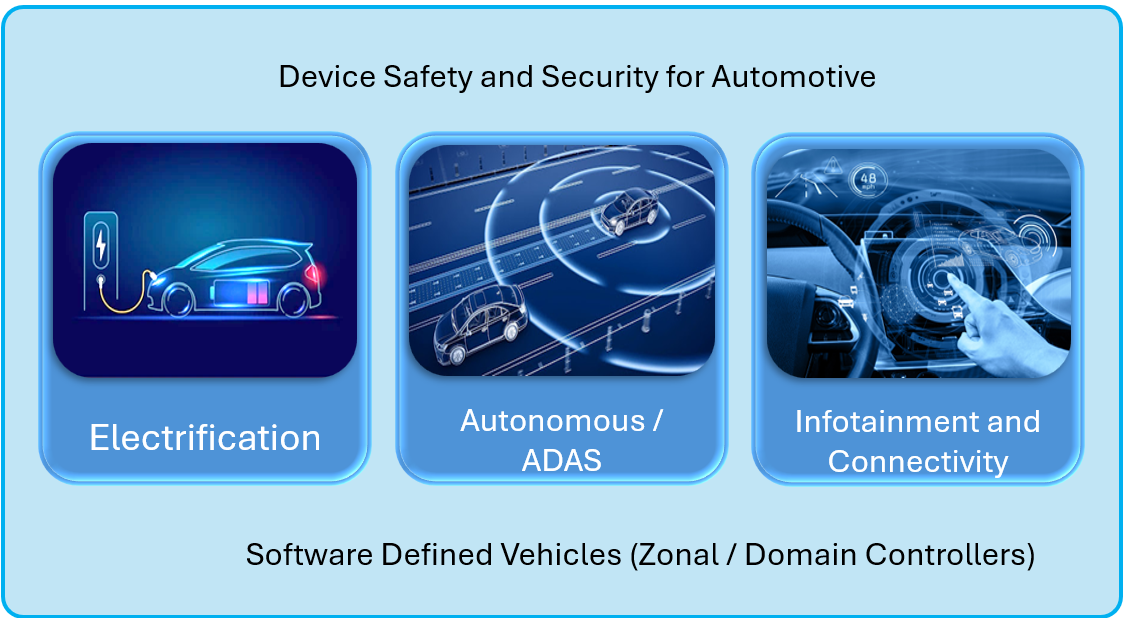
Electrification/ Fuel Cell EV Power Train
A FCEV comprises of Power Train, Electric Motor Inverts, FCEV, Hydrogen, Battery management systems, VCU, EPS, Motor Control, Battery management Systems (BMS), DC-DC converters. Ensuring electric vehicles operate with safety, security, reliability and performance is of paramount importance for OEMs/ Tier-1s.
- Vehicle Control Units (VCUs): Vehicle Control Units VCUs manage engine and transmission control for reliable performance.
- Hybrid and Electric Vehicle (HEV/EV) Power Systems: Ensures safe battery management, power distribution, DC-DC Conversion and motor control.
- Electronic Stability Control (ESC): Enhances vehicle stability with redundant sensors and actuators.
- Steer-by-Wire Systems: Electronic steering systems with fail-operational mechanisms and redundancy.
- Brake By Wire Systems: Electronic braking systems with fail-operational mechanisms and redundancy.
- Vehicle-to-Grid (V2G) Systems: Safeguards against power surges and ensures reliable energy transfer.
- Battery Monitoring System: Prevents overcharging, overheating, or deep discharging in electric vehicles.
- Powertrain Management: Safety measures in energy distribution and propulsion management, especially for EVs.
Autonomous /ADAS systems
ADAS systems, such as adaptive cruise control, lane-keeping assist, and collision avoidance, rely on a complex combination of sensors, software, and hardware. These systems must function with high degree of safe, security and reliability to prevent hazards and protect both drivers and passengers.
- Lane Keeping Assist (LKA): Ensures the vehicle stays within lane boundaries with redundant sensors and actuators.
- Adaptive Cruise Control (ACC): Maintains safe distances from other vehicles using reliable radar and vision systems.
- Drive-by-Wire Systems: Replaces mechanical controls with electronic systems, designed with fail-safe and redundancy features.
- Autonomous Emergency Braking (AEB): Software ensures real-time detection of obstacles and initiates safe braking under fail-safe conditions.
- Collision Avoidance Systems: Uses redundant cameras, radars, and LiDAR to detect and prevent potential accidents.
Infotainment and Connectivity
Infotainment and digital cockpit (including driver monitoring), Interior and Exterior Lamps, Displays, Tell Tales, Telematics (Wi-Fi, BT, C-V2X, GPS), Cloud connectivity (OTA, e-commerce) are integrate part to ensure Safety and Security of Autonomous Mobility Solutions.
- Driver Information Displays: Fault-tolerant systems to display critical vehicle data (speed, navigation, warnings).
- Augmented Reality (AR) Displays: Ensures accurate and non-intrusive overlay of information for driver assistance.
- Audio / Video Systems: Audio/Visual entertainment, information and warning systems.
- Emirror/Blind Spot Detection: Uses sensors and indicators to warn drivers about vehicles in blind spots.
- Occupant Monitoring Systems: Detects driver fatigue or distractions to provide alerts or take corrective actions.
- Vehicle-to-Everything (V2X) Communication: Redundancy and cybersecurity in communication systems with other vehicles and infrastructure.
Challenges in Automotive Mobility
Organizations in the automotive mobility industry face several key challenges related to functional safety:
-
- Increased System Complexity: With the rise of autonomous driving, electric vehicles, and advanced driver-assistance systems (ADAS), the complexity of automotive systems has grown significantly. Managing functional safety in such complex environments requires specialized expertise.
-
- Adapting to Evolving Standards: The automotive industry is governed by stringent functional safety standards such as ISO 26262, which are continuously evolving. Ensuring that safety processes remain compliant with these standards is challenging for organizations that lack dedicated safety resources.
-
- Integration of Software and Hardware: Ensuring the safe interaction between software and hardware components is critical in modern automotive systems. Failures in communication between these components can result in safety hazards, and ensuring seamless integration is a significant challenge.
-
- Time and Resource Constraints: Automotive mobility organizations are often under pressure to bring new products to market quickly, leaving little time for comprehensive safety assessments and implementations. This increases the risk of errors or oversights in safety processes.
Failure to address these challenges can lead to non-compliance, delays, safety incidents, and potential product recalls, impacting brand reputation and financial performance.
Why VerveTronics?
- Deep Expertise in ISO 26262 and ISO 21434: Our team has extensive experience with the ISO 26262 standard, ensuring that automotive systems meet the required safety and security integrity levels.
- Deep Expertise in Automotive Mobility: With specialized experience in autonomous vehicle technology and electric vehicle systems, VerveTronics is well-equipped to manage the safety challenges posed by ADAS and Electrification development.
- Holistic Approach to Safety and Security: We provide comprehensive functional safety services, from early-stage risk assessments to full-scale system validation, covering both hardware and software safety aspects.
- Innovative Solutions for Emerging Technologies: VerveTronics has a proven track record in addressing the unique safety challenges posed by autonomous driving and electric vehicle systems, ensuring compliance while enabling technological innovation.
- Safety Analysis and Risk Mitigation: We conduct in-depth safety analyses, including Failure Modes and Effects Analysis (FMEA) and Fault Tree Analysis (FTA), to identify and mitigate potential hazards.
- Training and Consulting: VerveTronics offers training and consulting sessions to enhance your team’s knowledge of functional safety and cyber security standards and methodologies, enabling them to manage safety-critical systems more effectively.
Our Approach
- People Knowledge & Competencies: A culture focussed with building deep knowledge and competencies across domains and standards.
- Tools & Process Automation: Emphasis on tools to automate process and thus achieve best in class quality through
- Requirements Management
- Dev Ops for CI/CD Continuous integration and Continuous Delivery.
- Traceability
- Hardware in Loop & Fault Insertion Testing
- Culture of precision, attention to details and excellence through continuous improvement.
- Requirements Engineering: Core competency of Requirement engineering and decomposition considering multifaceted systems engineering approach for architectural components.
- Safety/Security Analysis and Risk Reductions: Carry out thorough failure and threat analysis at various phases with optimum risk reduction techniques.
- Re-usable & Proven in use accelerators: Development and Usage of ready to use, time tested, proven in use accelerators that faced rigorous levels of compliances and testing.
VerveTronics Case Studies / Solutions

VerveTronics Role:
- Support for end to end ISO 26262 ASIL-D Safety Concept till certification
- Safety/Technical Concept and specifications ,
- Safety Analysis for System (HARA), Hardware(FMEDA), Software(FMEA) and Mechanical (FMEA)
- Safety Compliant Hardware Development and Assessment
- Safety Compliant Software Specifications, Validation and Assessment
- ASIL-D / SIL3 Process Development and Improvements
- Safety Assessment and Certifications
VerveTronics Role:
- Support for end to end ISO 26262 ASIL-C compliance
- Safety/Technical Concept and specifications ,
- Safety Analysis for Hardware(FMEDA), Software (FMEA) and Mechanical (FMEA)
- Safety Compliant Hardware Design and Assessment
- Safety Compliant Software Development and Assessment
- ASIL-C / ASPICE Process Development and Improvements
- Safety Assessment
VerveTronics Role:
- Functional Safety Concept and ASIL Decomposition/Allocation
- ECU Architecture and Connectivity.
- Safety/Technical Concept and specifications ,
- Safety Analysis for System, Hardware(FMEDA), Software (FMEA)
- Safety Compliant Hardware Design and Assessment
- Safety Compliant Software Development and Assessment
- Safety Assessment.
Knowledge Center
Invehicle Infotainment, Connectivity and Display
Automotive Functional Safety & ISO 26262 Expertise
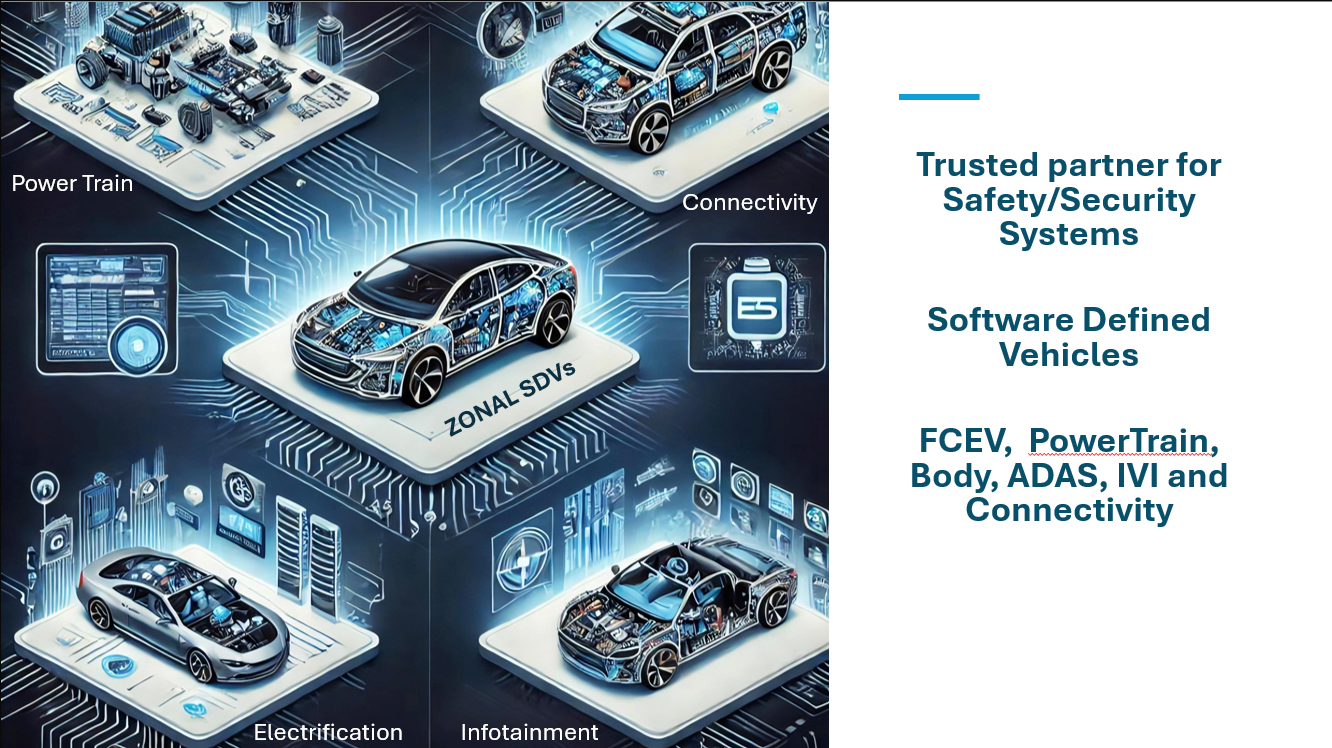
VerveTronics provides Automotive Functional Safety engineering and consulting expertise for safety-critical vehicle systems and electronic architectures. We support ISO 26262 programs across electric vehicles, powertrain, battery management systems, ADAS, infotainment, connectivity, software-defined vehicles, zonal/domain controllers and automotive ECUs.
Our experience spans the Functional Safety lifecycle from hazard analysis and safety goals through Functional and Technical Safety Concepts, safety requirements, architecture, hardware and software safety, verification and validation, safety assessment and certification support. We support automotive programs targeting ASIL A, ASIL B, ASIL C and ASIL D, with documented project experience including ASIL-D Electronic Power Steering/Vehicle Control, ASIL-C Battery Management System and an OEM zonal/SDV architecture involving an ASIL-D Zonal Controller and ASIL-B IVI.
For modern automotive programs, Functional Safety increasingly intersects with cybersecurity, connected vehicle architectures, software-defined vehicles and advanced driver-assistance systems. VerveTronics combines safety engineering with systems, hardware, software, analysis and verification expertise to help teams address safety across the vehicle lifecycle.
- Increasing E/E architecture complexity: Electrification, ADAS, centralized computing and zonal architectures create more interactions between ECUs, sensors, actuators, networks and software.
- Adapting to Evolving Standards: The automotive industry is governed by stringent functional safety standards such as ISO 26262, which are continuously evolving. Ensuring that safety processes remain compliant with these standards is challenging for organizations that lack dedicated safety resources. .
- EV and powertrain safety: BMS, inverters, motor control, DC-DC converters, VCUs and high-voltage power distribution introduce safety-critical electrical and control functions.
- ADAS and autonomous driving: ADAS functions combine sensors, software, computation and actuation. Safety analysis must account for system-level behavior, dependencies and fault reactions.
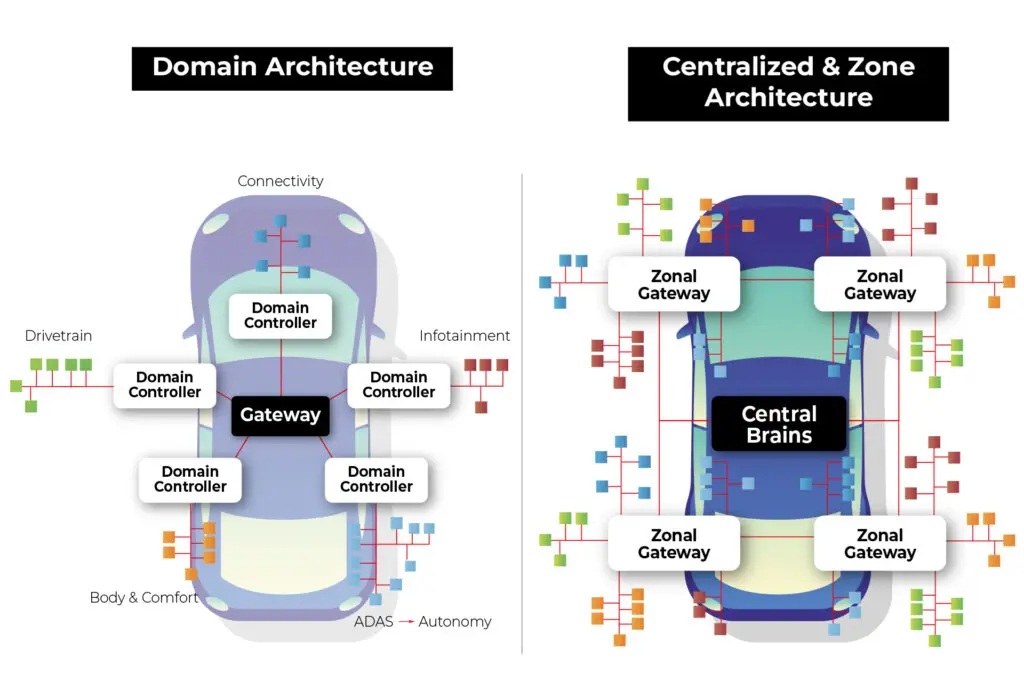
- Software-defined vehicle architectures: Centralized/zonal controllers, networks, operating systems, OTA updates and distributed functions create new safety dependencies and verification challenges.
- Infotainment and connectivity: IVI, displays, telematics, V2X, driver monitoring and connected services increasingly interact with vehicle functions and must be considered in the overall safety/security architecture where relevant.
- Hardware/software integration: Safety mechanisms often cross hardware, firmware, drivers, middleware and application software. Requirements and evidence must remain traceable.
- ASIL allocation and decomposition: Safety goals and ASIL allocations must be reflected consistently in architecture, safety requirements, safety mechanisms and verification.
- Schedule and assessment pressure: OEM and Tier-1 programs need safety evidence to mature alongside product development rather than becoming a late-stage documentation exercise.
- EV & Electrification — Battery management systems, battery monitoring, vehicle control units, electric motors, motor control, inverters, DC-DC converters, power distribution, electronic fuse boxes and V2G-related systems.
- Powertrain — Powertrain ECUs, propulsion control, motor control, inverter control, VCU functions and safety-related energy distribution.
- BMS — Functional Safety for battery monitoring and management functions. A documented VerveTronics case study covers an ASIL-C BMS program.
- ADAS & Autonomous Systems — LKA, ACC, AEB, collision avoidance, drive-by-wire and sensor-based systems involving cameras, radar and LiDAR.
- Infotainment & Digital Cockpit — IVI, displays, driver information, AR displays, audio/video, occupant monitoring, telematics and connectivity.
- SDV & Zonal Architecture — Zonal/domain controllers, ECU architecture, connectivity, distributed safety functions and software-defined vehicle safety. VerveTronics documents an OEM project involving a Zonal Controller at ASIL-D and IVI at ASIL-B.
- Steering & Braking — Electronic Power Steering, steer-by-wire and brake-by-wire functions with safety mechanisms and redundancy considerations.
- Connected Vehicle & Telematics — Wi-Fi, Bluetooth, C-V2X, GPS, cloud connectivity and OTA-related vehicle functions, with Functional Safety and cybersecurity considered according to scope.
- ISO 26262 — Primary Automotive Functional Safety Standard: Core focus: HARA, safety goals, FSC, TSC, ASIL, requirements, architecture, hardware/software safety, verification/validation and assessment.
- ISO 21434 — Automotive Cybersecurity: Supporting standard for connected, software-defined and electronically controlled vehicles.
- ISO 21448 / SOTIF: Supporting topic for safety of intended functionality, particularly ADAS and automated-driving applications.
- UN ECE R155 / R156: Regulatory context for vehicle cybersecurity and software updates.
- SAE J3016: Supporting terminology/taxonomy for driving automation.
- UL 4600: Relevant safety framework for autonomous products where applicable
- Deep Expertise in ISO 26262 and ISO 21434: Our team has extensive experience with the ISO 26262 standard, ensuring that automotive systems meet the required safety and security integrity levels.
- Deep Expertise in Automotive Mobility: With specialized experience in autonomous vehicle technology and electric vehicle systems, VerveTronics is well-equipped to manage the safety challenges posed by ADAS and Electrification development.
- Holistic Approach to Safety and Security: We provide comprehensive functional safety services, from early-stage risk assessments to full-scale system validation, covering both hardware and software safety aspects.
- Innovative Solutions for Emerging Technologies: VerveTronics has a proven track record in addressing the unique safety challenges posed by autonomous driving and electric vehicle systems, ensuring compliance while enabling technological innovation.
- Safety Analysis and Risk Mitigation: We conduct in-depth safety analyses, including Failure Modes and Effects Analysis (FMEA) and Fault Tree Analysis (FTA), to identify and mitigate potential hazards.
- Training and Consulting: VerveTronics offers training and consulting sessions to enhance your team’s knowledge of functional safety and cyber security standards and methodologies, enabling them to manage safety-critical systems more effectively.
- HARA & Safety Analysis — HARA, safety goals, ASIL classification, FMEA, FMEDA, FTA and DFA.
- Functional & Technical Safety Concepts — FSC, TSC, safety requirements, ASIL allocation/decomposition and safety architecture.
- Automotive Hardware Functional Safety — Hardware safety architecture, FMEDA, safety metrics, diagnostic coverage, safety mechanisms and assessment.
- Automotive Software Functional Safety — Software safety requirements, architecture, implementation support, verification, traceability and assessment.
- Safety Verification & Validation — Unit, integration and system testing, HIL, fault injection, regression, timing/performance and safety validation.
- Functional Safety Audit & Assessment — Process audit, gap assessment, work-product review, safety case/evidence, assessment readiness and certification support.
- Safety Management & Process — Safety planning, lifecycle implementation, reviews, confirmation measures, process improvement and training.
- Safety Case & Compliance Evidence — Safety argument, compliance matrix, requirements traceability, analysis evidence and assessment preparation.
-
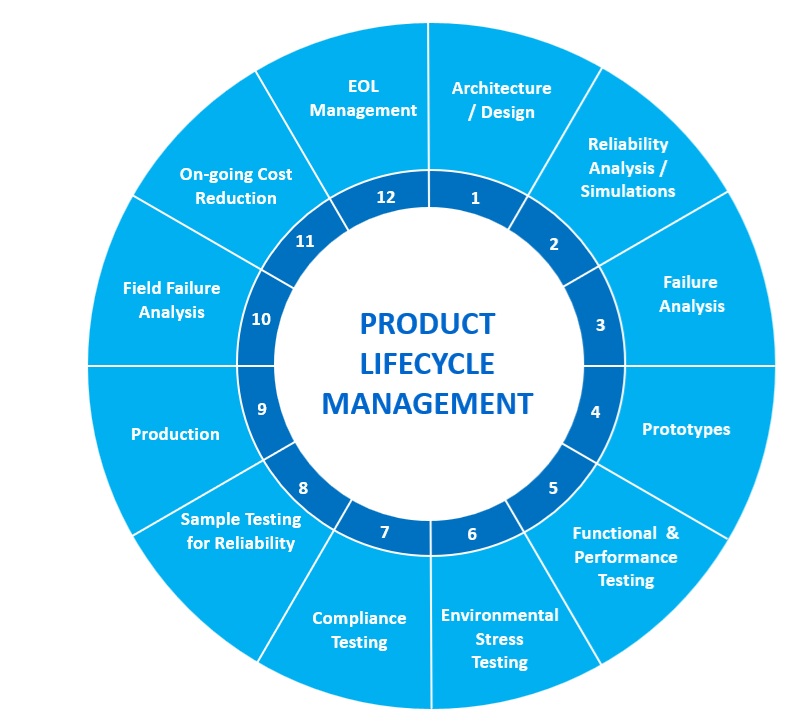
Automotive ISO 26262 Safety Lifecycle
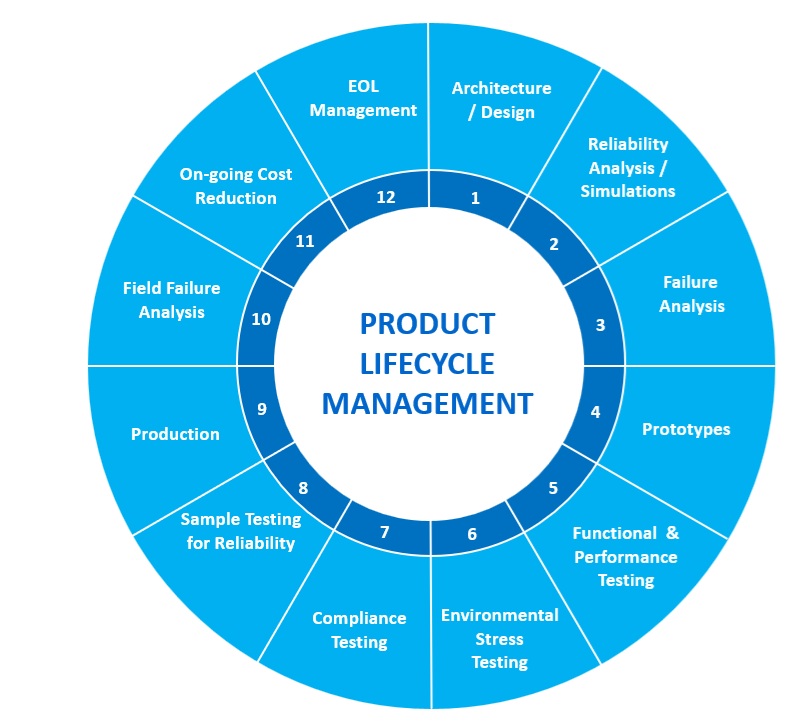
- Item Definition → HARA → Safety Goals → Functional Safety Concept → Technical Safety Concept → System Architecture → Hardware/Software Safety → Safety Analysis → Verification & Validation → Safety Case → Assessment
Embedded Hardware Development Services
ASIL-D Electronic Power Steering & Vehicle Control — European Automotive Tier-1
VerveTronics Role:
- Premium passenger-car program. Documented role: end-to-end ISO 26262 ASIL-D safety concept through certification, safety/technical concept and specifications, HARA, hardware FMEDA, software/mechanical FMEA, safety-compliant hardware development and assessment, software specifications/validation/assessment, ASIL-D/SIL3 process improvement and safety assessment/certification.
 ASIL-C Battery Management System — US Tier-1
VerveTronics Role:
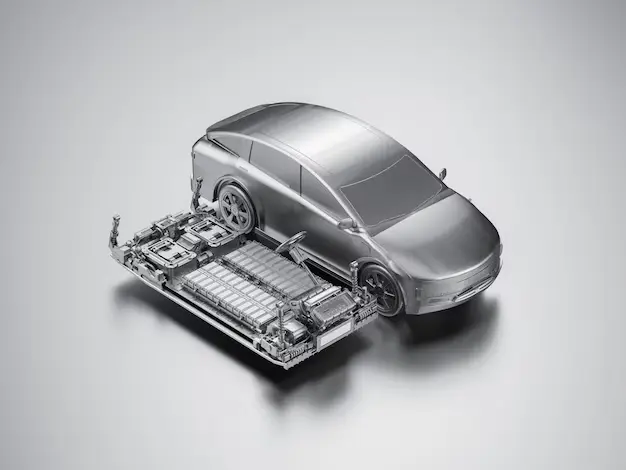
- Documented role: end-to-end ISO 26262 compliance, safety/technical concept and specifications, hardware FMEDA, software/mechanical FMEA, safety-compliant hardware design and assessment, software development and assessment, ASIL-C/ASPICE process development/improvement and safety assessment.
Automotive_Zonal_SDVs
Zonal / SDV Architecture — European OEM
VerveTronics Role:
- Development of zonal/SDV architecture-based ECUs, including a Zonal Controller at ASIL-D and IVI at ASIL-B. Documented role: Functional Safety Concept, ASIL decomposition/allocation, ECU architecture/connectivity, safety/technical concepts, system/hardware/software safety analysis, hardware/software development and assessment
- Safety/security interface analysis for connected automotive architectures.
- Cybersecurity considerations for telematics, V2X, OTA and connected ECUs.
- Safety impact considerations from cybersecurity-related failures or attacks where applicable.
- Support for organizations developing ISO 26262 and ISO 21434 processes in parallel.
- SDV architecture considerations spanning controllers, networks, operating systems, testing and validation.
- Automotive Functional Safety Consulting — Advisory and engineering support for OEMs, Tier-1 suppliers, semiconductor and technology companies.
- Project-Based Safety Engineering — Defined HARA, safety concept, hardware/software safety, V&V or assessment work packages.
- Embedded Safety Engineering Team — Functional Safety engineers integrated with customer system, hardware, software and quality teams.
- Independent Review / Gap Assessment — Review existing safety work products and identify gaps before customer, internal or independent assessment.
- Training & Workshops — ISO 26262, HARA, safety concepts, FMEDA, FMEA, DFA, V&V and safety-process workshops.
- CTA: Need Automotive Functional Safety Support for Your ISO 26262 Program?
Talk to VerveTronics about your EV, powertrain, BMS, ADAS, infotainment or SDV Functional Safety requirements. Share your safety target, product architecture and development stage to discuss the appropriate safety engineering scope.
- Request Automotive Functional Safety Consultation
- Discuss an ISO 26262 Project
- Review Your ASIL / Safety Architecture
- Talk to an Automotive Functional Safety Expert
- What is Automotive Functional Safety? –Automotive Functional Safety addresses unreasonable risk arising from malfunctioning behavior of electrical and electronic systems in road vehicles. ISO 26262 provides the automotive Functional Safety framework.
- What is ISO 26262? – ISO 26262 is the international Functional Safety standard for electrical and electronic systems in road vehicles. It defines a safety lifecycle, risk classification using ASIL, safety requirements and engineering activities across the product lifecycle.
- What automotive systems can be developed according to ISO 26262? – ISO 26262 can apply to safety-related electrical and electronic systems across vehicle functions. VerveTronics’ documented automotive expertise includes EV/BMS, powertrain, EPS, braking, ADAS, infotainment, connectivity, DC-DC converters, inverters, motor control, domain/zonal controllers and SDV systems.
- Does VerveTronics support EV Functional Safety? – Yes. The current page covers EV/HEV power systems, BMS, VCUs, motor control, inverters, DC-DC converters, V2G and powertrain-related functions.
- Does VerveTronics support BMS ISO 26262 projects? – Yes. VerveTronics documents an ASIL-C BMS project for a US Tier-1 supplier, including safety concepts, FMEDA, FMEA, hardware/software development and assessment.
- Does VerveTronics support ADAS Functional Safety? – Yes. Documented domain expertise includes LKA, ACC, AEB, collision avoidance, drive-by-wire and autonomous/ADAS systems involving sensor, software and hardware integration.
- Does ISO 26262 apply to infotainment? – Applicability depends on the functions and their safety relevance. Infotainment can include driver information, warnings, displays, connectivity and interfaces with vehicle functions.
- What is Functional Safety in an SDV? – SDV Functional Safety considers how safety goals, requirements, architectures, controllers, networks, operating systems, software and validation interact in a software-defined vehicle. VerveTronics documents an SDV/zonal project with an ASIL-D Zonal Controller and ASIL-B IVI.
- What is ASIL in ISO 26262? – ASIL is the Automotive Safety Integrity Level classification used by ISO 26262. The standard defines ASIL A through ASIL D, with engineering rigor depending on the risk classification.
- Can VerveTronics support ASIL-D projects? – Yes. VerveTronics documents an ASIL-D Electronic Power Steering/Vehicle Control project through certification and an ASIL-D Zonal Controller within an SDV architecture project.
- Does VerveTronics provide ISO 26262 certification? – VerveTronics provides Functional Safety engineering, consulting, assessment and certification support. Formal independent certification or assessment, where required, is performed by the applicable independent organization.
- What is the difference between this automotive page and the ISO 26262 consulting page? – This page should be the automotive-domain expertise hub covering EV, powertrain, BMS, ADAS, infotainment and SDV. The dedicated ISO 26262 consulting page should provide deeper service-level detail. This separation also reduces keyword cannibalization.