
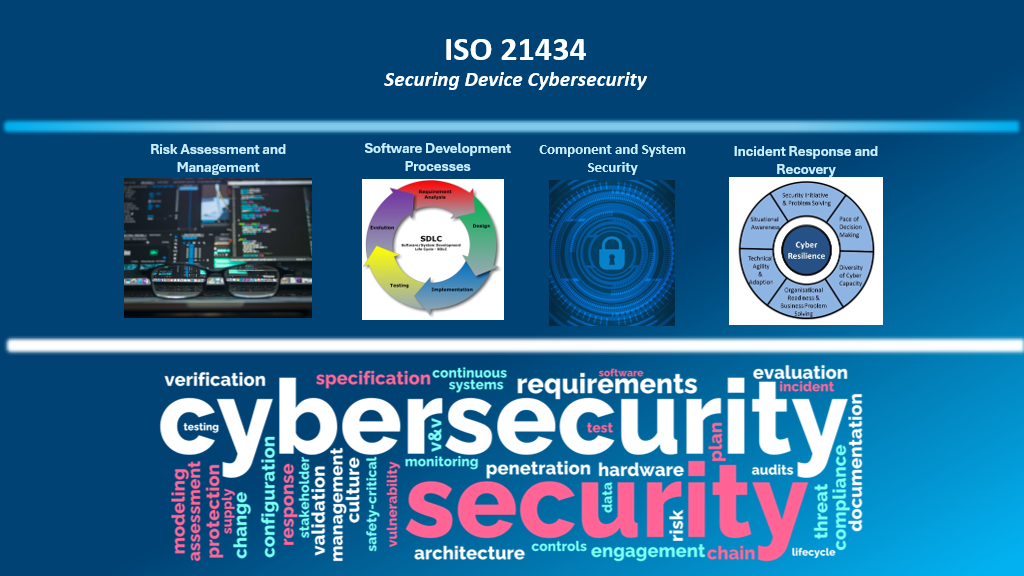
As the automotive industry advances toward increased connectivity, electrification, and automation, cybersecurity has become a fundamental concern. Modern vehicles depend heavily on complex software architectures and interconnected communication networks, significantly expanding the attack surface. If left unaddressed, cybersecurity vulnerabilities can compromise safety-critical functions, posing serious risks to drivers, passengers, pedestrians, and surrounding infrastructure.
To systematically manage these risks, the ISO/SAE 21434 standard provides a comprehensive framework for cybersecurity risk management in road vehicles. It establishes structured processes for identifying, assessing, and mitigating cyber risks throughout the entire vehicle lifecycle — from concept and development to production, operation, and decommissioning — ensuring resilience against evolving cyber threats.
At VerveTronics, we understand the urgency and complexity of automotive cybersecurity compliance. Our experienced team supports automotive manufacturers and suppliers in aligning with ISO/SAE 21434 requirements by integrating robust cybersecurity practices into product development and lifecycle management. Through tailored, risk-based solutions, we help our clients strengthen system security, reduce vulnerabilities, and build resilient automotive technologies ready for the future.
Overview of ISO/SAE 21434
ISO/SAE 21434, titled “Road Vehicles – Cybersecurity Engineering,” establishes cybersecurity engineering requirements and processes for managing cybersecurity risks in road vehicles. The standard defines a structured, risk-based approach to integrating cybersecurity throughout the entire vehicle lifecycle — from concept and development to production, operation, and decommissioning. Its objective is to systematically identify, assess, treat, and monitor cybersecurity risks affecting vehicle electrical and electronic systems.
ISO/SAE 21434 provides an organizational cybersecurity management framework that supports governance, threat analysis and risk assessment (TARA), risk treatment, validation, and continuous monitoring activities. By addressing the confidentiality, integrity, and availability of vehicle systems and related assets, the standard enables manufacturers and suppliers to strengthen the resilience of connected vehicle technologies against evolving cyber threats.
As vehicles become increasingly connected and automated, incorporating advanced electronic architectures, telematics, V2X communication, and software-driven functionality, the cybersecurity attack surface expands significantly. This evolving landscape demands a proactive and systematic cybersecurity strategy to prevent unauthorized access, system manipulation, and potential safety impacts. Failure to adequately manage these risks can compromise user safety, regulatory compliance, and brand reputation. Consequently, alignment with ISO/SAE 21434 is becoming an essential requirement for automotive manufacturers and suppliers operating in today’s connected mobility ecosystem.
Why VerveTronics?
VerveTronics stands out in the automotive cybersecurity landscape thanks to our deep expertise and extensive experience in both cybersecurity and transportation technology. Our team is well-versed in the nuances of ISO 21434 and can provide comprehensive support to ensure compliance and risk management. We understand the intricacies of the automotive environment and are equipped to develop tailored solutions that meet the specific needs of our clients. Our commitment to excellence ensures that we not only address current challenges but also anticipate future cybersecurity demands.
Our Approach
VerveTronics offers a range of services designed to help automotive manufacturers implement ISO/SAE 21434 effectively. Our approach includes:
-
- Risk Assessment: Conducting thorough threat analysis and risk assessments to identify vulnerabilities in automotive systems.
- Cybersecurity Strategy Development: Assisting clients in developing comprehensive cybersecurity strategies that align with ISO 21434 requirements.
- Training and Support: Providing training for teams on best practices in cybersecurity engineering and compliance.
- Documentation and Compliance: Helping organizations create and maintain the necessary documentation to demonstrate compliance with the standard.
- Ongoing Monitoring: Establishing processes for continuous monitoring and review of cybersecurity measures to adapt to evolving threats.
VerveTronics Case Studies/Solutions

VerveTronics has successfully worked with clients across various industries to develop and deploy safety compliant systems. Our case studies demonstrate our ability to implement cost-effective, safety-critical solutions that improve system performance while ensuring full regulatory compliance.
VerveTronics has successfully worked with clients across various industries to develop and deploy safety compliant systems. Our case studies demonstrate our ability to implement cost-effective, safety-critical solutions that improve system performance while ensuring full regulatory compliance.
VerveTronics has successfully worked with clients across various industries to develop and deploy safety compliant systems. Our case studies demonstrate our ability to implement cost-effective, safety-critical solutions that improve system performance while ensuring full regulatory compliance.
Knowledge Center
Cybersecurity Responsibilities of ISO 21434
Cyber Security ISO 21434 and Safety
IoT Device Security